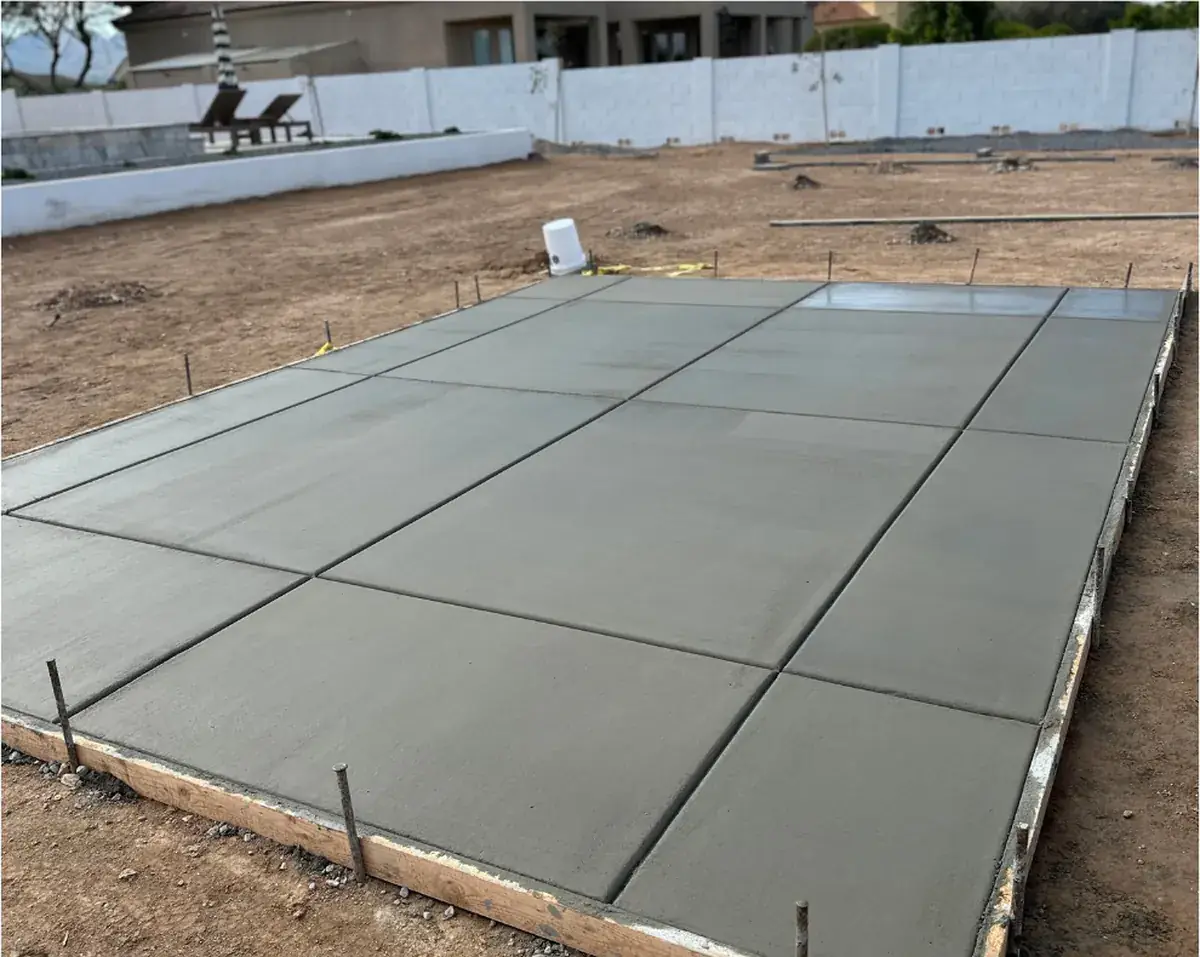
Concrete Pads in Phoenix, AZ
Concrete pads in Phoenix, AZ for the things that sink into gravel: RVs and trailers, sheds, AC and pool equipment, spas and side yards. Our featured contractor is Richard, a licensed Arizona contractor with more than 15 years in the Valley.
- Concrete RV and trailer pads
- Shed, AC and spa pads
- Side-yard and driveway extensions
- Cracked pad replacement
Why concrete pads in Phoenix are their own job
The short answer: in Phoenix a pad is often about more than convenience. The city requires parking and maneuvering areas in front and side yards to be dust-free, the ground underneath is often caliche, and a slab poured in July cures in some of the hottest air in the country. A good pad is sized to what it carries, set on a compacted base, sloped away from the house, jointed, and cured properly. Published Phoenix prices run $7 to $12 per square foot for reinforced concrete.
Start with the rules. Phoenix City Code 36-145 and Zoning Ordinance 702 require parking areas in front and side yards to be paved with asphalt or concrete, or, on a single-family lot, covered with at least 3 inches of crushed rock or gravel held in by a permanent border. Mesa and Gilbert have their own versions, quoted on the permit and parking rules guide. A trailer parked on dirt beside the house is the classic code complaint.
Then the ground. Much of the Valley sits on caliche, soil cemented by calcium carbonate into a layer that the University of Arizona Cooperative Extension says runs from a few inches to several feet thick. It makes a firm base, and it is also the reason a dig-out sometimes takes a breaker instead of a shovel.
And the heat. Phoenix has averaged about 21 days a year at or above 110 degrees since the 1990s, and new concrete loses water fast in that air. The hot-weather standard, ACI 305.1, allows concrete up to 95 degrees F at discharge. Getting the pour in early and keeping the slab wet while it cures is what separates a pad that stays smooth from one that crazes in its first summer.
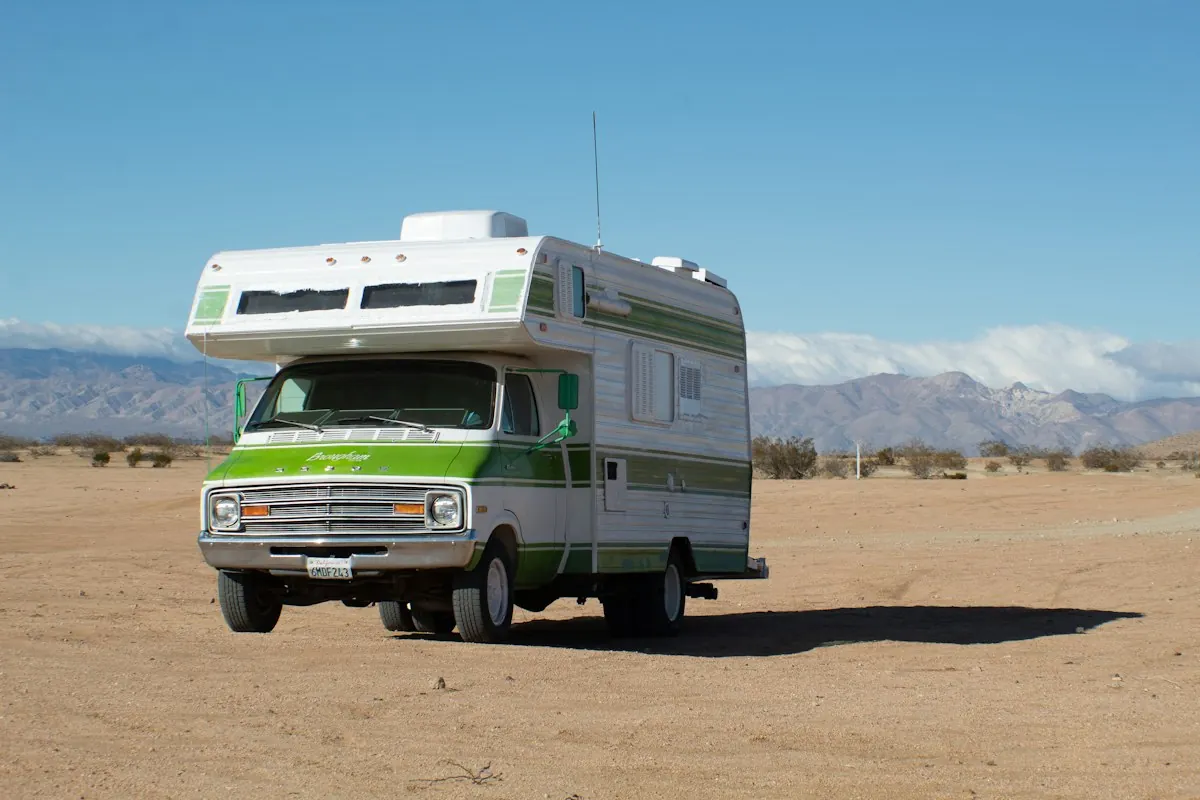
Meet Richard
5-star rated on Google
Richard is a licensed Arizona block and concrete contractor who has worked across the Valley for more than 15 years.
- Over 15 years of experience
- 5-star rated on Google
- Homeowner pads and flatwork
- Major credit cards accepted
- Fast, expert, ethical service
- Licensed Arizona contractor
“Amazing work!! Very reliable, quality work. I really liked working with Richard, he was excellent with customer service and replying/communication. Reasonable price and timely work.”
“Richard came out to give us an estimate and was very courteous and professional. … The crew were also very professional and neat.”
“The quality of the work was excellent and the service even better!”
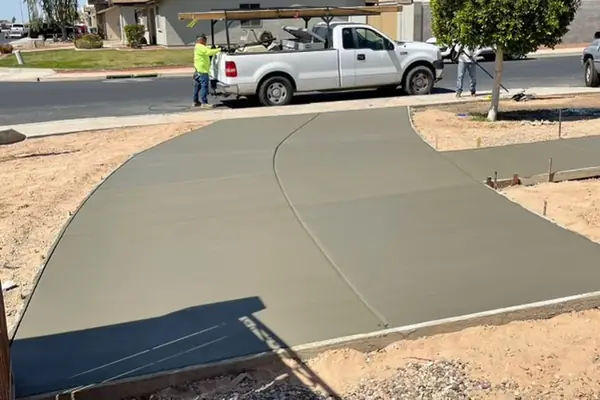
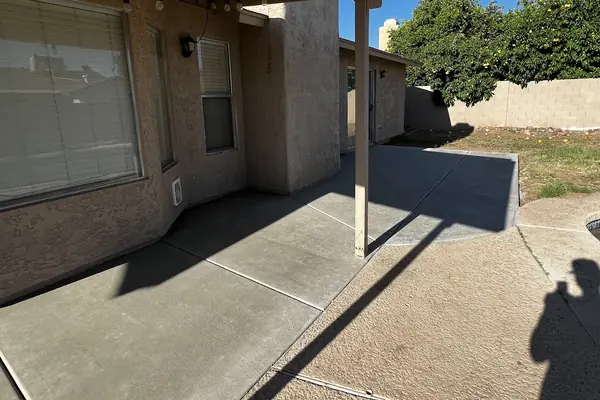
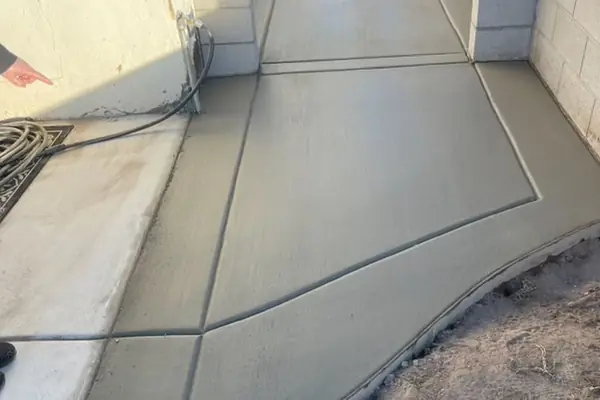
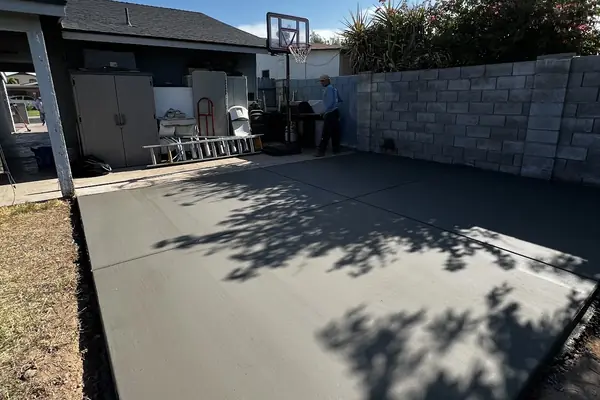
Richard's own jobs around the Valley: a curved driveway, a covered patio slab, a jointed side yard and a backyard pad beside the block wall.
Concrete pad services in Phoenix, AZ
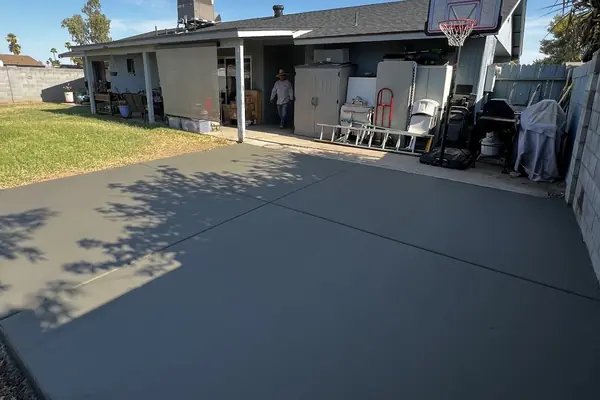
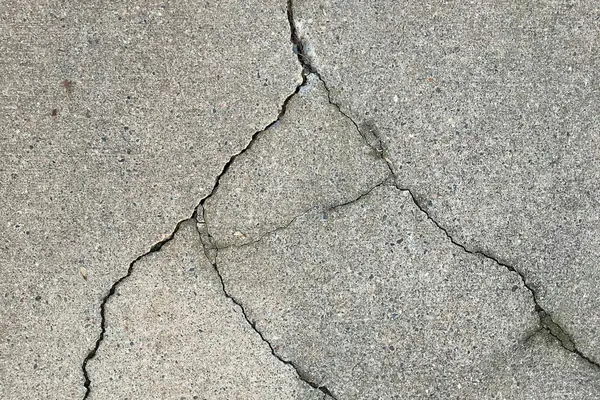
Fourteen kinds of ground-level pad, from a 3x3 slab under an AC condenser to a 14-foot-wide RV pad behind the side gate. These three are what most people come here for. The full list of concrete pad services covers the rest.
What a concrete pad costs in Phoenix, by job
Most pads in Phoenix land between a few hundred dollars for an equipment pad and about $4,000 to $6,000 for a 12x40 reinforced RV pad, using HomeBlue's published 2026 Phoenix rate of $7 to $12 per square foot for reinforced concrete. The table puts that rate next to the size and thickness each kind of pad usually needs, which is the comparison no single price page gives you.
| Pad | Typical size | Typical thickness | Published Phoenix range |
|---|---|---|---|
| AC condenser pad | 3x3 to 4x4 | 3 to 4 in | $110 to $200 for 3x3 (HomeBlue, incl. minimum charge) |
| Pool equipment pad | 5x5 to 6x10 | 4 in | $200 to $400 for 5x5 (HomeBlue) |
| Shed pad | 10x10 to 10x14 | 4 in, reinforced | $1,000 to $1,600 for 10x10 (HomeBlue) |
| Hot tub pad | 8x8 to 10x10 | 4 in, reinforced | about $640 to $1,600 (scaled from HomeBlue 10x10) |
| Trailer or boat pad | 10x24 to 12x30 | 4 to 5 in, reinforced | $1,680 to $4,320 at $7 to $12/sf |
| RV pad, 12x40 | 480 sq ft | 5 to 6 in, reinforced | $3,360 to $5,760 at $7 to $12/sf |
| Two-car width extension | 20x20 | 4 to 6 in, reinforced | $3,800 to $6,500 (HomeBlue) |
Swipe the table sideways to see every column →
HomeBlue figures are its published Phoenix size prices; other rows multiply HomeBlue's $7 to $12 per square foot reinforced rate by the size shown. Add $1.20 to $1.90 per square foot to break out old concrete, and allow for caliche and access. Small pads carry minimum charges.
The full breakdown, with the add-ons that move a quote, is in the concrete pad cost guide and the RV pad cost guide.
Signs you need a concrete pad, or a new one
If any of these sound familiar, it is time to price a pad.
- The RV or trailer sits on dirt or loose gravel in a front or side yard
- Tires leave ruts after monsoon rain, or the rig will not sit level
- The AC condenser has tilted, sunk, or sits on a cracked or broken pad
- The shed rocks, the doors bind, or the floor is wet after a storm
- Pool equipment sits on pavers or dirt and keeps shifting
- Water pools against the house where a pad slopes the wrong way
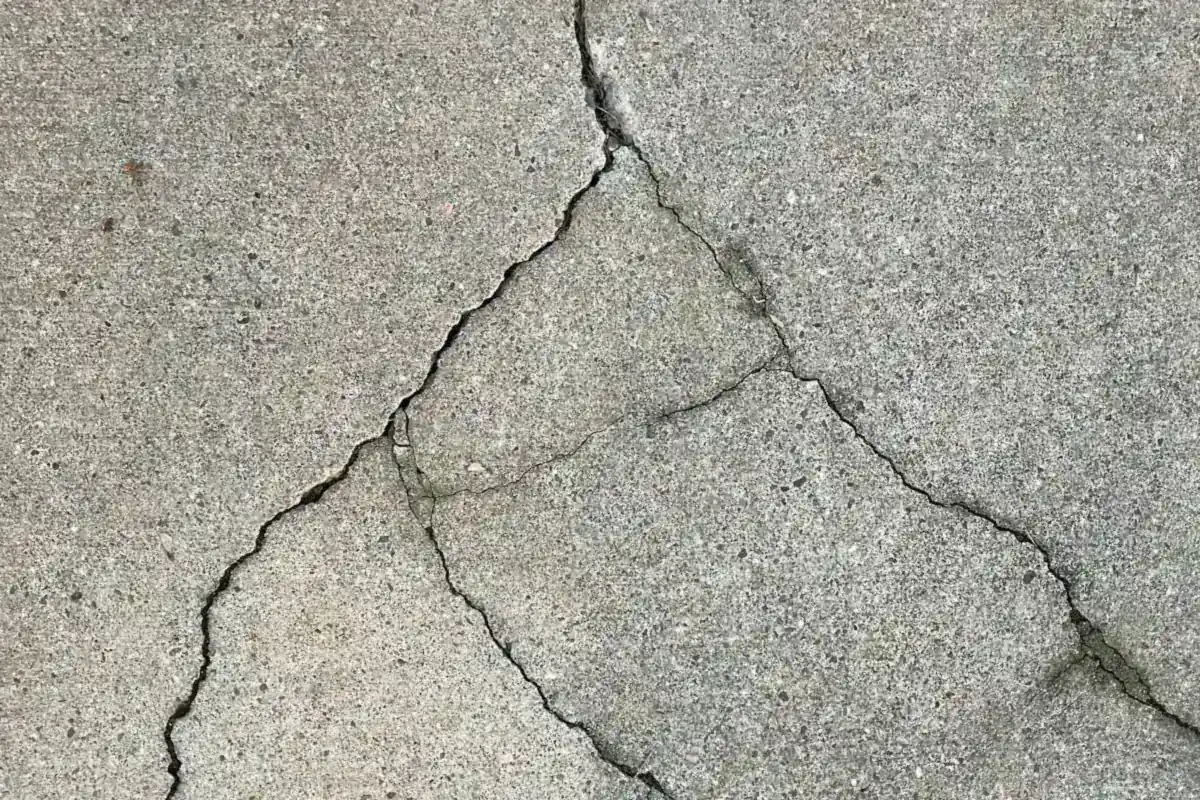
- An old pad is cracked across, heaved, or has dropped at one corner
- The trash cans live in mud and gravel along the side yard
The parking and permit rules a Phoenix pad has to meet
In Phoenix, a ground-level slab usually needs no building permit, but where you park on it is regulated. The rules differ by city, so here they are side by side.
| City | Parking surface | Where an RV may sit |
|---|---|---|
| Phoenix | Front and side yard parking must be dust-free: asphalt, concrete, or 3 in of gravel in a permanent border on a single-family lot | Rear yard is exempt from the surface rule; HOA rules may add more |
| Mesa | Front or side yard vehicles on concrete, asphalt or 3 in of crushed rock surrounded by a concrete border (8-6-3 T) | Not on the driveway or street over 48 hours (8-6-3 Z); boats and trailers in the rear yard or side yard behind the front face of the house (8-6-3 U) |
| Gilbert | Outside the front and street-side setback | Screened from streets and neighbors by a solid fence or landscaping; heavier vehicles behind the rear wall plane and 10 ft from property lines |
Swipe the table sideways to see every column →
Phoenix: City Code 36-145 and Zoning Ordinance 702. Mesa: City Code 8-6-3. Gilbert: Land Development Code Article 4.2. Confirm current wording with your city before you build.
On permits, the City of Phoenix's "Work Exempt from Permit" bulletin exempts platforms, sidewalks and driveways that are no more than 30 inches above grade, not over a basement, and not part of an accessible route. Work in the street right of way is different: the City's single-family driveway policy treats up to 10.5 feet of concrete driveway in the right of way as part of the on-site job where the street has roll or ribbon curb, and requires a separate driveway permit beyond that, with residential driveway concrete 6 inches thick.
All of it, quoted and linked, is in do you need a permit for a concrete pad in Phoenix.
What makes a concrete pad last in the Valley
Five things, in order: the base, the thickness, the steel, the joints and the cure. Get them right and a pad outlasts the shed or the trailer on it. Skip one and it shows within a couple of summers.
The base comes first because concrete only spreads load; it does not create support. Published RV pad practice calls for 4 to 6 inches of aggregate base compacted in lifts. Thickness follows the load: a walkway or AC pad is fine at 3 to 4 inches, an RV pad wants 5 to 6 inches or more. Steel holds cracks tight once they form, and joints decide where they form: every 8 to 12 feet on a 4-inch slab under ACI 360R-10 guidance.
The cure is the Phoenix-specific step. Keeping the surface wet, or sealing it with curing compound, slows the water loss that causes surface crazing and plastic shrinkage cracks. See RV pad thickness and rebar and the cost guide, which covers what caliche adds to a quote.
How a concrete pad job runs in Phoenix
Seven stages, most of them before any concrete arrives. A small equipment pad can go from site visit to finished slab quickly; an RV pad with demolition and caliche takes longer, mostly in the dig-out.
- 1Tell us what the pad is for
Send the four-field form with what the pad will carry, rough size, and where it goes. An RV class and length, a shed size or a spa model is enough to start.
- 2Site visit and measurement
The spot is checked: the slope, how water drains, how a truck or wheelbarrow reaches it, and anything that has to come out first: old concrete, gravel, roots or caliche.
- 3Written, itemized quote
Size, thickness, reinforcement, base depth, slope, joints, finish, demolition and haul-off, each written down, with the contractor's ROC license number on the estimate.
- 4Layout, dig-out and base
The pad is marked, excavated to grade, and a compacted aggregate base is placed. Forms are set to the finished height and slope.
- 5Reinforcement and pour
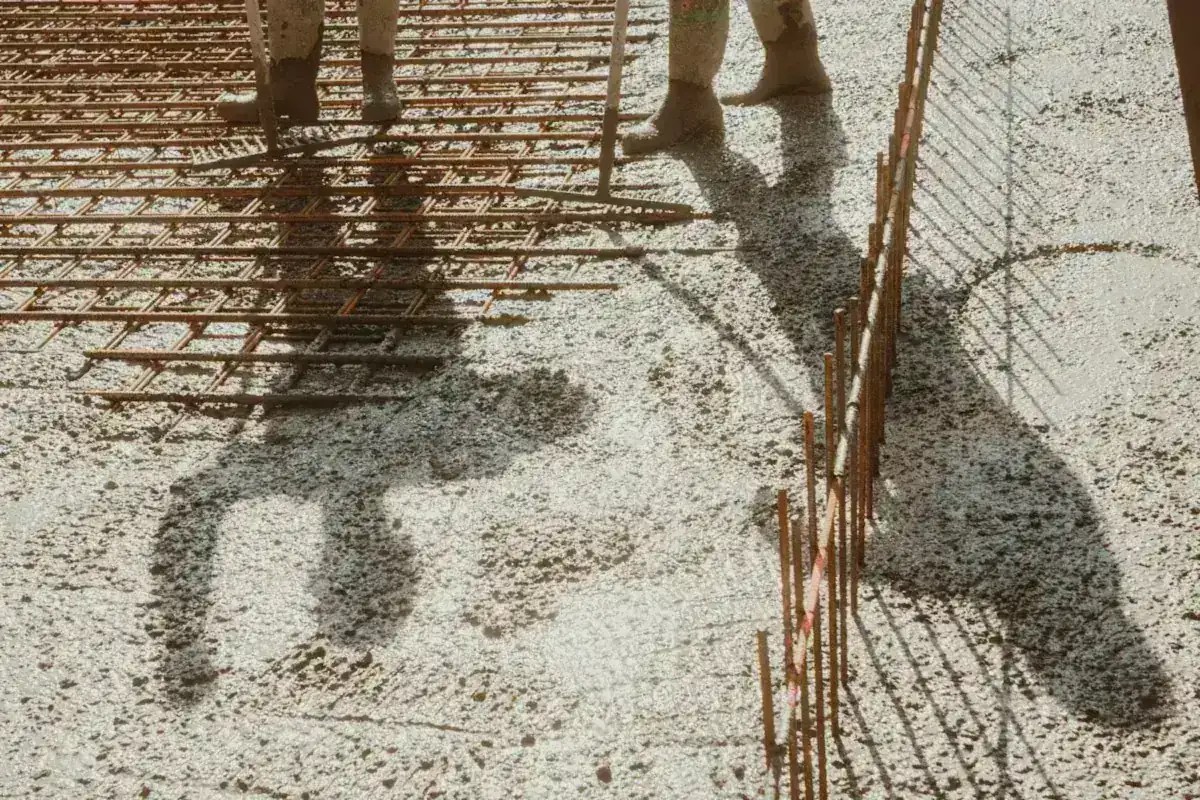
Rebar or mesh is set on chairs so it sits inside the slab, not on the dirt. Concrete is placed, screeded, floated and given a broom finish for traction.
- 6Joints and curing
Control joints are tooled or saw-cut to plan, and the slab is kept moist or sealed with curing compound. In summer the pour starts at first light.
- 7Handover
The forms come out once the edges are set, and the slab cures before it carries weight.
Concrete pads across the Phoenix metro
Phoenix and the Valley cities around it. Each city page covers that city's own parking and RV rules.
- Concrete pads in Mesa→
- Concrete pads in Gilbert→
- Concrete pads in Chandler→
- Concrete pads in Glendale→
- Concrete pads in Peoria→
- Concrete pads in Tempe→
- Concrete pads in Avondale→
- Concrete pads in Goodyear→
- Concrete pads in Surprise→
Not sure you are covered? See the full service area or just send the form with your cross streets.
Concrete pad guides for Phoenix homeowners
Costs, sizes, thickness, permits and the Arizona-specific questions: heat, caliche and gravel versus concrete. Every figure names its source.
Concrete pads in Phoenix, AZ: frequently asked questions
How much does a concrete pad cost in Phoenix?
Published 2026 Phoenix figures from HomeBlue put a reinforced concrete slab at $7 to $12 per square foot and an unreinforced pad at $6 to $11 per square foot. By size, HomeBlue lists a 10x10 slab at $1,000 to $1,600 and a 20x20 at $3,800 to $6,500. Breaking out old concrete adds $1.20 to $1.90 per square foot, and a hard caliche layer can add more.
How thick should a concrete RV pad be?
Thicker than a patio. Published practice is about 4 inches with rebar for light travel trailers, 5 to 6 inches for fifth wheels and Class C motorhomes, and at least 6 inches of 4,000 psi concrete on 4 to 6 inches of compacted base for heavy Class A coaches. For comparison, the City of Phoenix specifies 6-inch concrete for residential driveways in the street right of way.
Do I need a permit for a concrete pad in Phoenix?
Usually not for the slab itself. The City of Phoenix 'Work Exempt from Permit' bulletin exempts platforms, sidewalks and driveways not more than 30 inches above grade that are not over a basement and not part of an accessible route. Driveway work in the street right of way is different: past 10.5 feet in the right of way, the City's driveway policy requires a separate permit. HOA approval is a separate question.
Can I park an RV in my side yard in Phoenix?
Generally yes, if the surface is dust-free. Phoenix requires parking and maneuvering areas in front and side yards to be dustproofed: asphalt, concrete, or for a single-family lot, at least 3 inches of crushed rock or gravel inside a permanent border. The rear yard is exempt from that surface rule. Many HOAs add their own rules on screening and gates, so check yours.
How long before I can park an RV on a new concrete pad?
Longer than you can walk on it. HomeBlue's Phoenix guide says a new slab is usually walkable in about 48 hours, heavier loads should wait about a week, and concrete takes 28 to 30 days to reach full cure. For a loaded motorhome, ask your contractor for a date in writing and lean toward the longer end.
Can concrete be poured in Phoenix in the summer?
Yes, with hot-weather practice. ACI 305.1-14 allows concrete up to 95 degrees F at discharge, and the Arizona Rock Products Association calls curing the most critical step in heat. In practice summer pours start at first light, the base is dampened, and the slab is kept moist or sealed with curing compound so the surface does not dry and crack before it gains strength.
Why do concrete pads crack, and can it be prevented?
Concrete shrinks as it dries, so some cracking is normal. Control joints decide where it happens. ACI 360R-10 guidance spaces joints at 24 to 36 times the slab thickness, so a 4-inch pad gets joints every 8 to 12 feet, cut at least a quarter of the slab's depth. Most other cracking traces back to a soft or poorly compacted base, missing reinforcement, or a pad that cured too fast in the heat.
About Phoenix Concrete Pads
Phoenix Concrete Pads is a local concrete pad service for the Phoenix metro. It connects homeowners with an independently licensed Arizona contractor, and it does one thing: ground-level pads, sized and built for what sits on them. No foundations, no structural slabs.
Every price, rule and spec on the site was read at its source and is linked where it appears. More on how the site works, and what it does not claim, is on the about page.
Get a free concrete pad quote
Tell us what the pad is for and where it goes. No obligation.
Get a Free Pad Quote