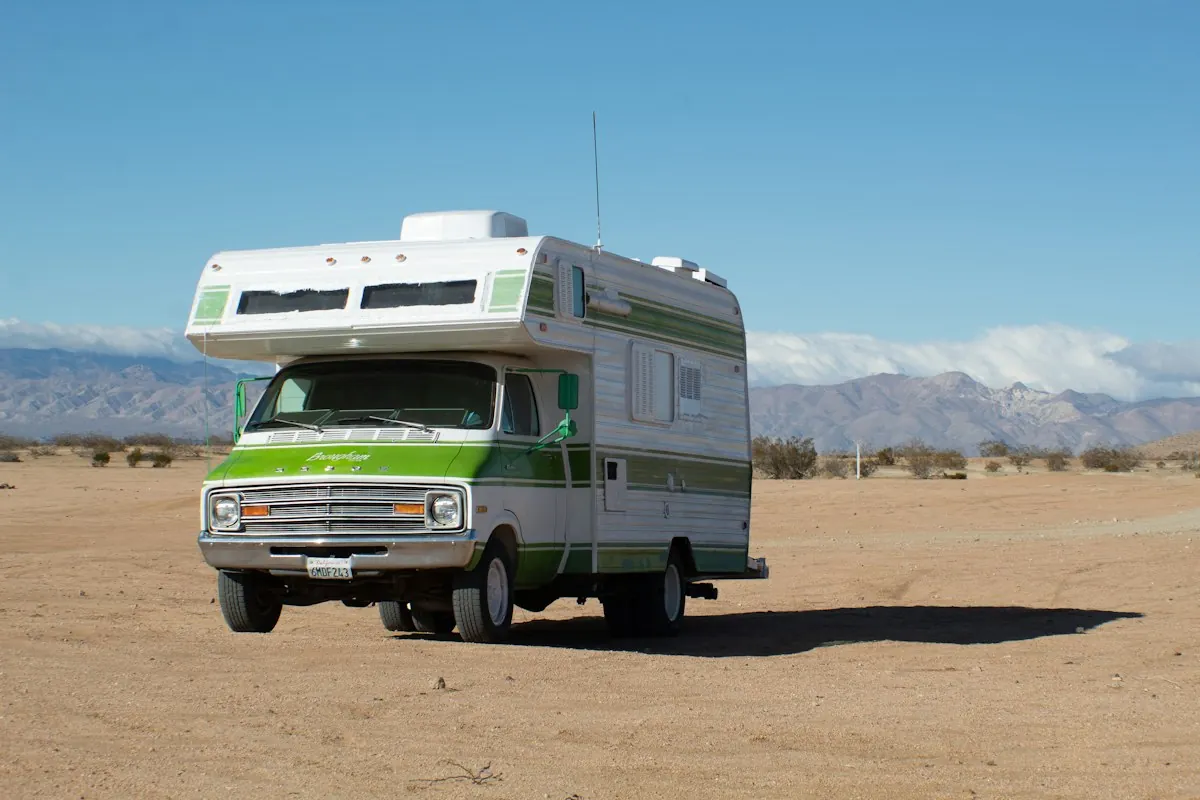
What a good RV pad in Phoenix looks like
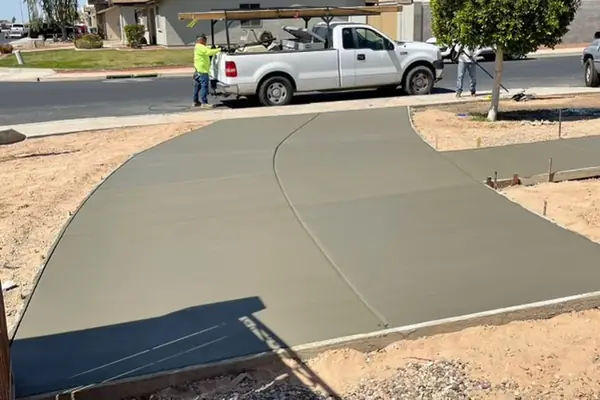
A concrete RV pad in Phoenix is a reinforced slab, usually 5 to 6 inches thick, long and wide enough for the rig with room to walk around it, poured on compacted base and sloped so water runs away from the house. Done that way it stays flat under a 20,000 pound coach for decades. Done like a patio, 4 inches on loose dirt, it cracks where the tires sit.
The other reason Phoenix homeowners pour one is the parking rule. Phoenix City Code 36-145 and Zoning Ordinance 702 require parking and maneuvering areas in front and side yards to be dust-free, which means asphalt, concrete, or on a single-family lot at least 3 inches of crushed rock or gravel held in by a permanent border. A trailer on bare dirt beside the house does not meet it.
Thickness and reinforcement by RV type
The heavier the rig, the thicker the slab and the tighter the steel. Class A motorhomes range from about 12,500 pounds to 54,000 pounds of gross weight, and the longest 45-foot coaches ride on a third tag axle because two axles cannot carry them. A pad sized for a pop-up trailer is the wrong pad for that.
| RV type | Typical weight | Thickness | Reinforcement |
|---|---|---|---|
| Pop-up, teardrop, small travel trailer | Lightest; check the GVWR sticker | 4 in | Rebar or mesh, centered |
| Travel trailer, toy hauler | Check the GVWR sticker | 4 to 5 in | #4 rebar on a grid |
| Fifth wheel, Class C | 12,000 to 20,000 lb | 5 to 6 in | #4 rebar, 16 in grid |
| Class A gas | 16,000 to 24,000 lb | 6 in | #4 rebar, 12 to 16 in grid |
| Class A diesel pusher, 40 to 45 ft | 25,000 to 54,000 lb GVWR | 6 in or more, 4,000 psi | #4 rebar, 12 in grid; thicken under wheel paths |
Swipe the table sideways to see every column →
Compiled from published RV pad practice and manufacturer weight ranges. Every pad should sit on 4 to 6 inches of compacted aggregate base. These are typical specs, not engineering; your quote should state the spec for your rig.
The longer version, including joints and the base, is in RV pad thickness and rebar.
Sizing the pad to the rig
Start from the rig, not from a round number. Measure bumper to bumper including the hitch or ladder, add 2 to 4 feet at each end, then size the width for the entry door and slide-outs on the side they open.
- 12 feet wide suits most travel trailers, fifth wheels and Class C motorhomes
- 14 feet wide gives a Class A with slide-outs room to walk around and open storage bays
- Published pad sizes run from 10x40 up to 14x65
- Leave room to swing in: the turn through a side gate needs more width at the entry than the pad itself
- Plan for the next rig, too; widening a pad later costs more than pouring it wider now
The full sizing table is in how big should an RV pad be.
What an RV pad costs in Phoenix
About $3,360 to $5,760 for a 12x40 reinforced pad at HomeBlue's published Phoenix rate of $7 to $12 per square foot. A 10x40 comes in at about $2,800 to $4,800, and a 14x50 at about $4,900 to $8,400 before add-ons.
| Pad size | Square feet | At $7 to $12 per sq ft |
|---|---|---|
| 10x40 | 400 | $2,800 to $4,800 |
| 12x40 | 480 | $3,360 to $5,760 |
| 12x45 | 540 | $3,780 to $6,480 |
| 14x50 | 700 | $4,900 to $8,400 |
Swipe the table sideways to see every column →
HomeBlue's published 2026 Phoenix reinforced slab rate multiplied by area. Add $1.20 to $1.90 per sq ft to remove old concrete; caliche break-out and difficult access add more.
More detail, including what pushes a quote up or down, is in the RV pad cost guide.
Where the pad goes, and the rules that come with it
Side yard behind a gate
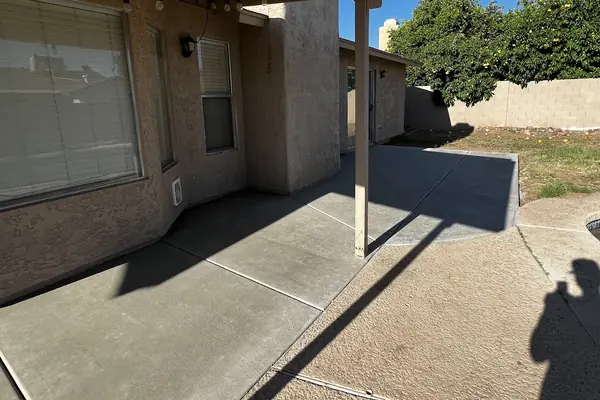
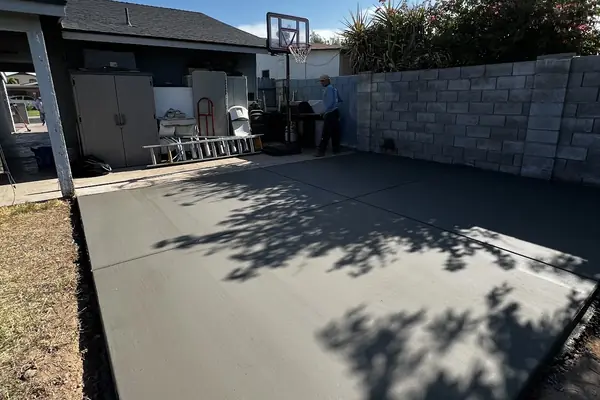
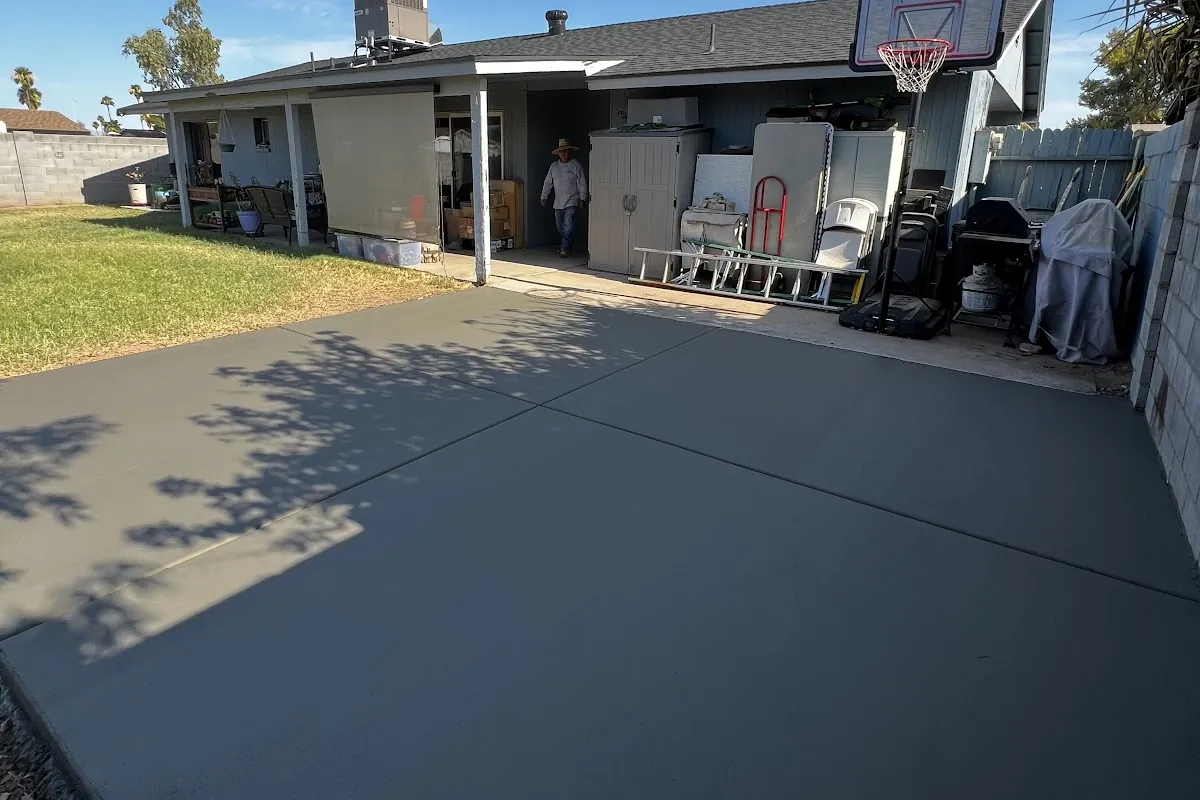
The most common Phoenix layout: the RV goes through a wide gate in the block wall and parks in the side yard. In Phoenix that side-yard parking area has to be dust-free. See side yard RV parking pads.
Beside the driveway
Widening the drive on your own lot to make an RV bay. If the work reaches into the street right of way, the City of Phoenix driveway policy applies past 10.5 feet. See driveway extensions.
In the rear yard
Phoenix's dust-free surface rule does not apply in the rear yard of a single-family lot, but a pad still keeps the rig level and out of the mud. Mesa and Gilbert set their own rules on where RVs may sit, quoted in the permit and parking rules guide.
How the pad is built
- Measure the rig and the route. Length, width, slide-outs and door side, plus the path the RV takes from the street, through the gate and onto the pad.
- Lay out and dig out. The pad is marked, excavated to grade, and any old concrete, gravel or high caliche comes out.
- Build the base. Aggregate base is placed and compacted in lifts so the slab has even support from edge to edge.
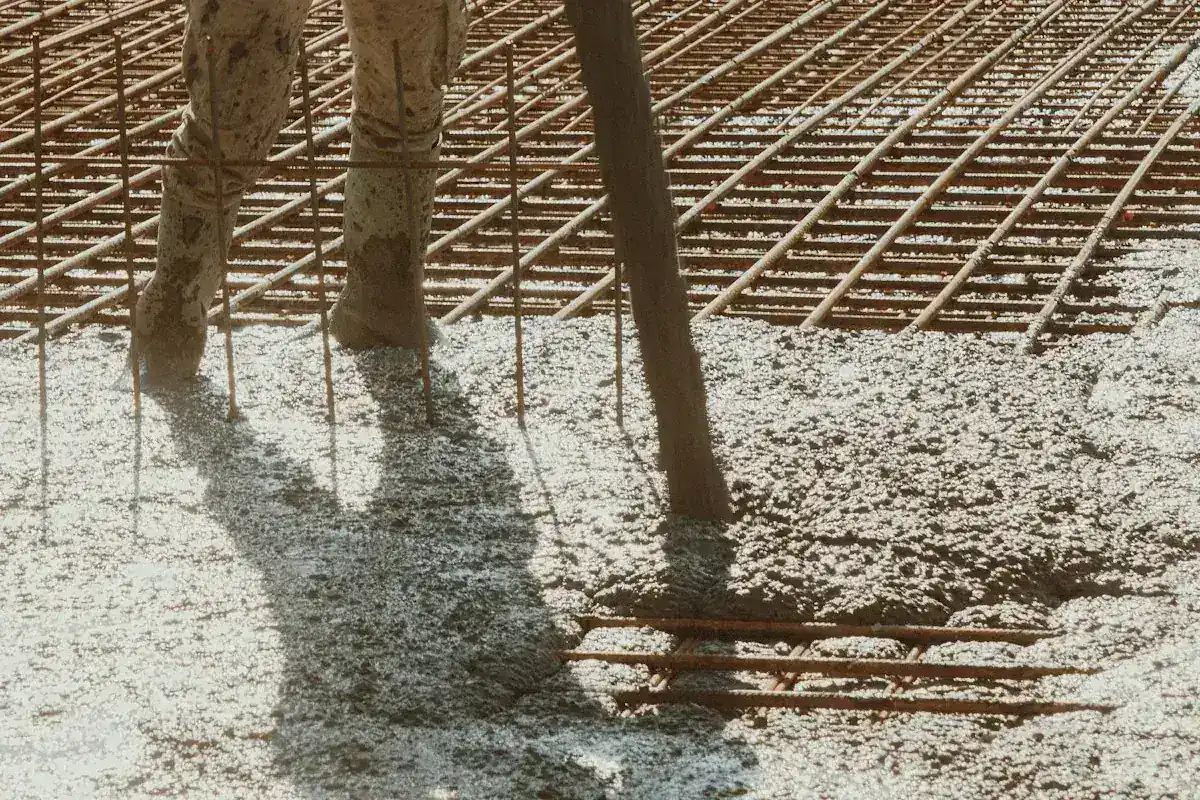
- Form, slope and reinforce. Forms are set with a fall away from the house, and rebar goes in on chairs so it sits inside the slab.
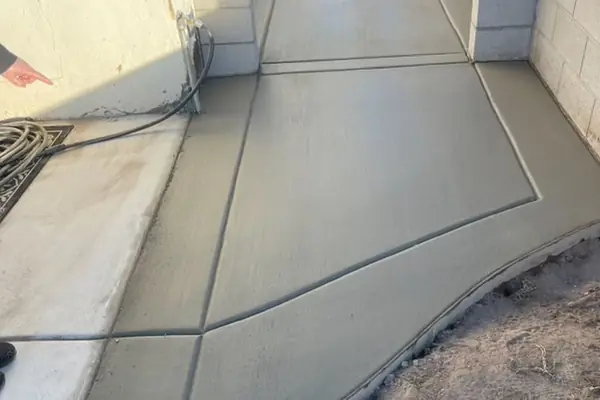
- Pour, finish and joint. Concrete is placed and screeded, given a broom finish for traction, and jointed to plan.
- Cure before you park. The slab is kept moist or sealed with curing compound, and you get a written date for parking the rig on it.