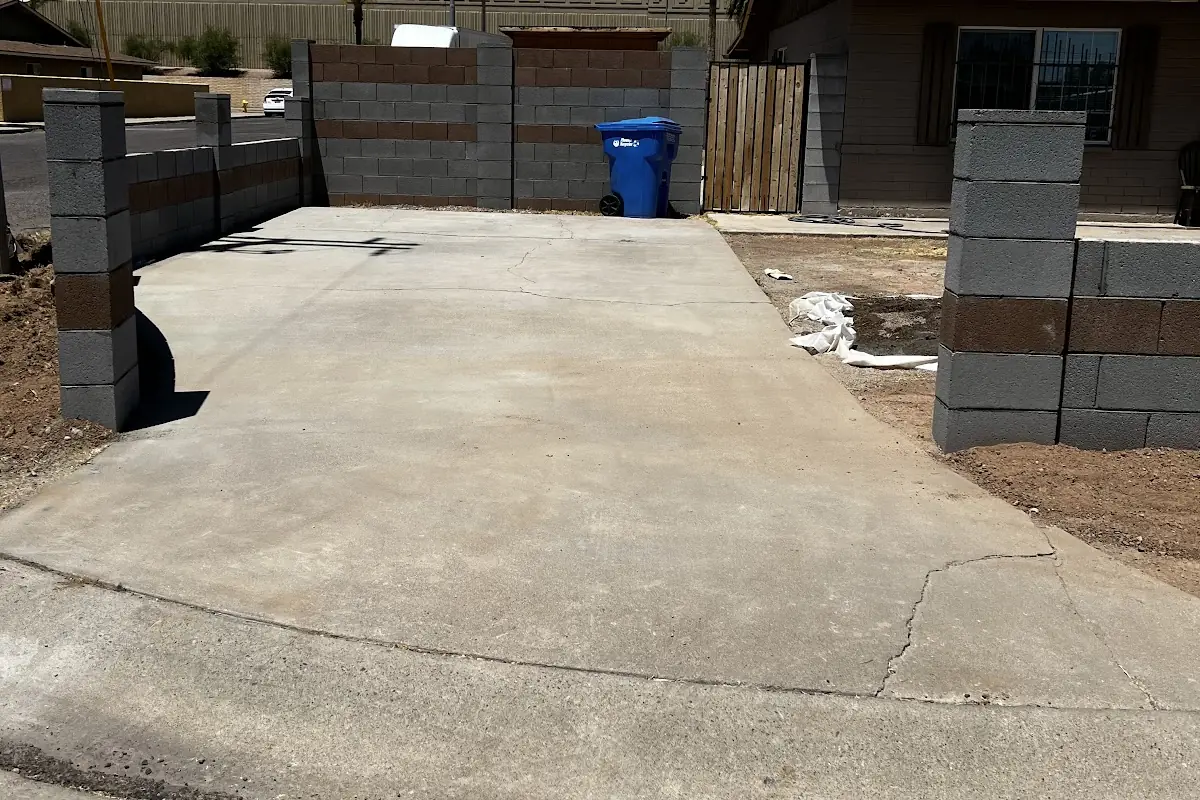
The Phoenix rule a side yard RV pad has to meet
In Phoenix, a parking area in a front or side yard has to be dust-free, which means asphalt, concrete, or on a single-family lot at least 3 inches of crushed rock or gravel held in by a permanent border. That comes from City Code 36-145 and Zoning Ordinance 702. The rear yard of a single-family lot is exempt from the surface rule; the side yard is not.
That is why a trailer or motorhome on bare dirt beside the house is one of the most common parking complaints in Valley neighborhoods, and why a side yard RV pad is usually the first concrete job on a newly bought RV.
| Surface | Meets the rule? | What to expect |
|---|---|---|
| Bare dirt or decomposed granite with no border | No | Dust, ruts after rain, and a code complaint risk |
| Gravel at least 3 in deep inside a permanent border | Yes, on a single-family lot | Cheapest compliant option; ruts and needs topping up |
| Asphalt | Yes | Softens in summer heat under jacks and stabilizers |
| Concrete | Yes | Flat, cleanest, sheds water; highest upfront cost |
Swipe the table sideways to see every column →
Phoenix City Code 36-145 and Zoning Ordinance 702. HOA rules can be stricter.
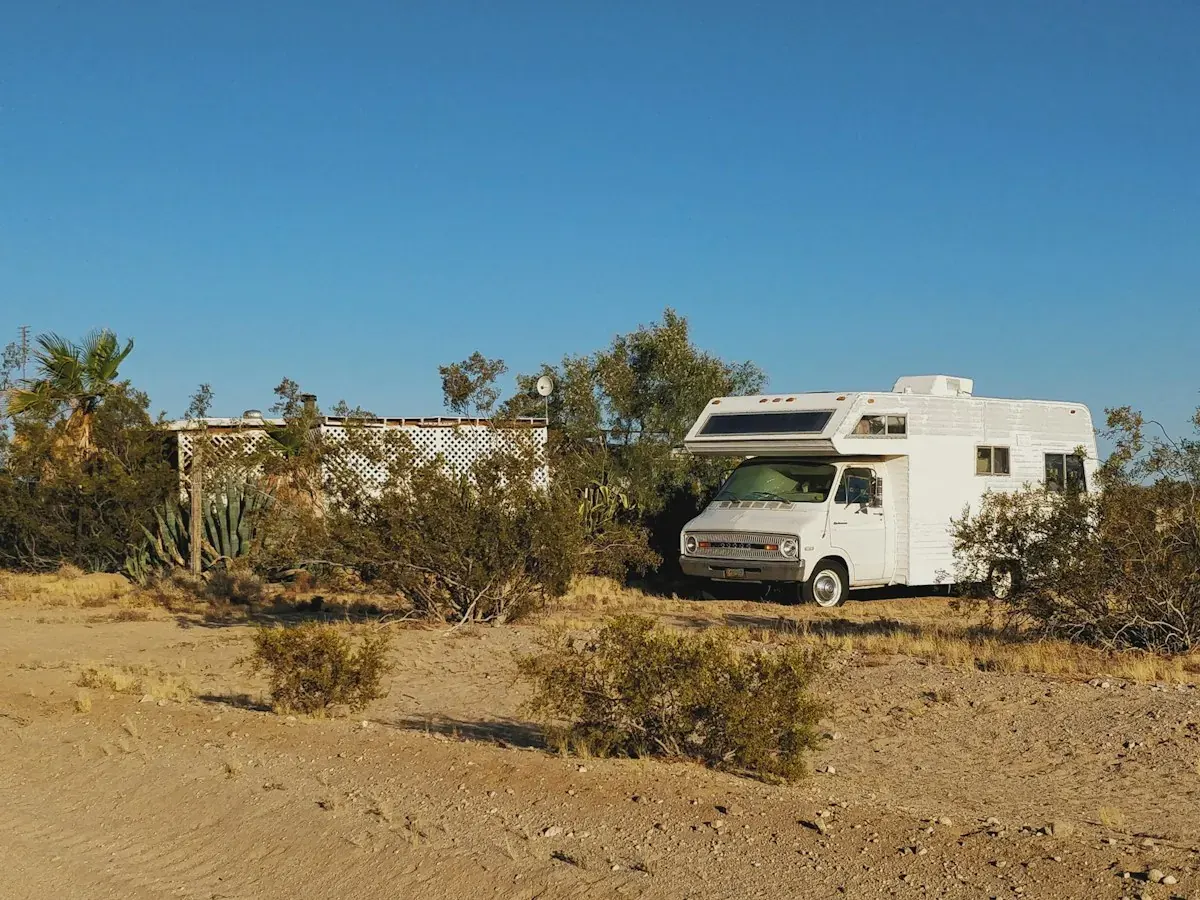
Planning the pad around the gate
The gate decides more than the pad does. Most side yard RV setups in the Valley have a double RV gate in the block wall, and the rig has to swing through it from the street or driveway. Measure these before anything else:
- The clear gate opening, post to post, and the rig's width including mirrors
- The side yard's narrowest point, often at an AC unit, a gas meter or the house corner
- Overhead clearance under eaves, trees and any patio cover
- Which side the RV door and slide-outs open toward
- Where roof and yard water already drains, so the pad does not dam it against the house
If the AC condenser sits in the way, the job often includes moving it onto a new pad. See AC condenser pads. For the slab spec itself, see concrete RV pads.
How it is built
The side yard is excavated to grade, a compacted aggregate base goes down, and the pad is formed with a fall away from the house. For most trailers and Class C motorhomes that means a 5 to 6 inch slab with a rebar grid; heavy Class A coaches go to 6 inches or more. Joints are cut so cracks follow them, and the slab is cured before the rig rolls on.
Where budget is tight, a common compromise is concrete wheel strips or a concrete apron at the gate with bordered gravel behind it. It meets the rule and costs less, though it is harder to level on. The trade-offs are in concrete vs gravel RV pads.