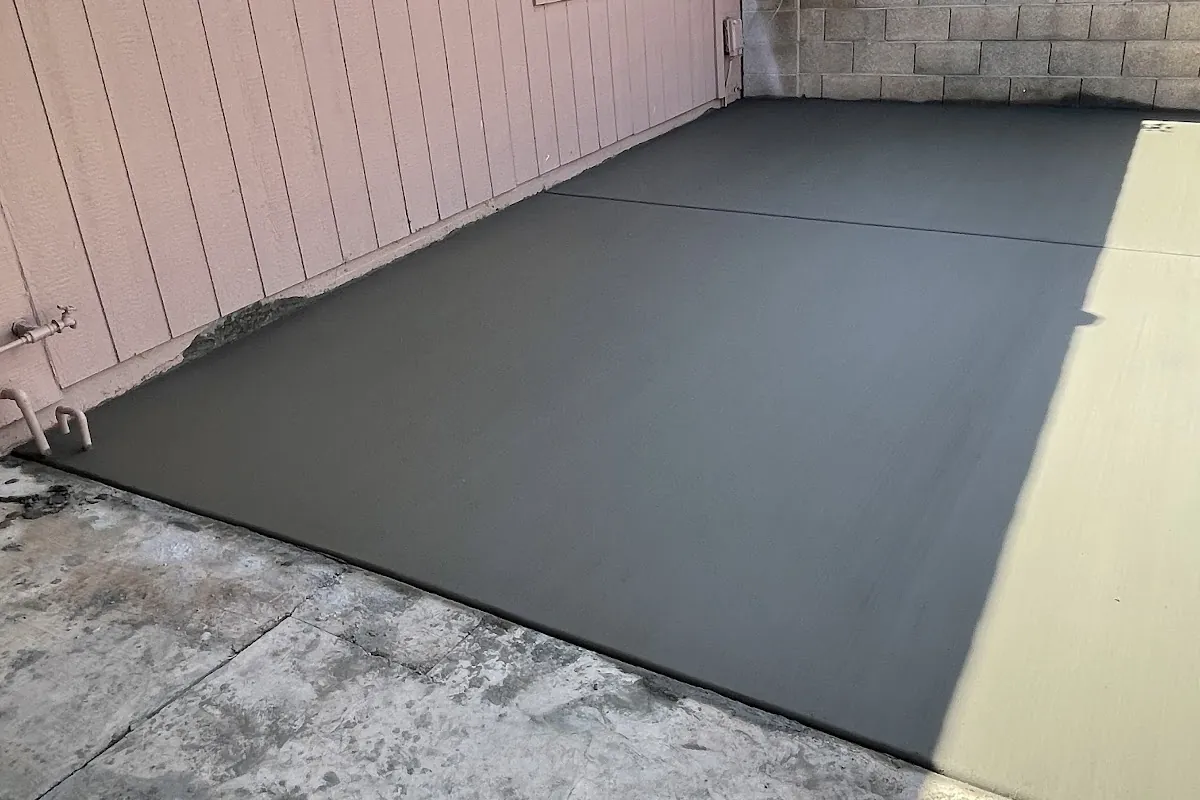
Why a spa needs its own kind of pad
A hot tub is the heaviest thing most people put in a backyard, and it needs even support. Water weighs about 8.34 pounds per gallon, so a mid-size spa full of water carries well over a ton and a half before anyone gets in. On pavers or gravel, one corner settles and the shell twists; on a sloped patio, the spa sits out of level and the cabinet takes the strain.
| Spa capacity | Water weight | Plus |
|---|---|---|
| 250 gallons | about 2,090 lb | Shell, cover and bathers |
| 350 gallons | about 2,920 lb | Shell, cover and bathers |
| 450 gallons | about 3,750 lb | Shell, cover and bathers |
Swipe the table sideways to see every column →
Water at about 8.34 pounds per gallon. Your spa's spec sheet lists the full filled weight and the base it requires.
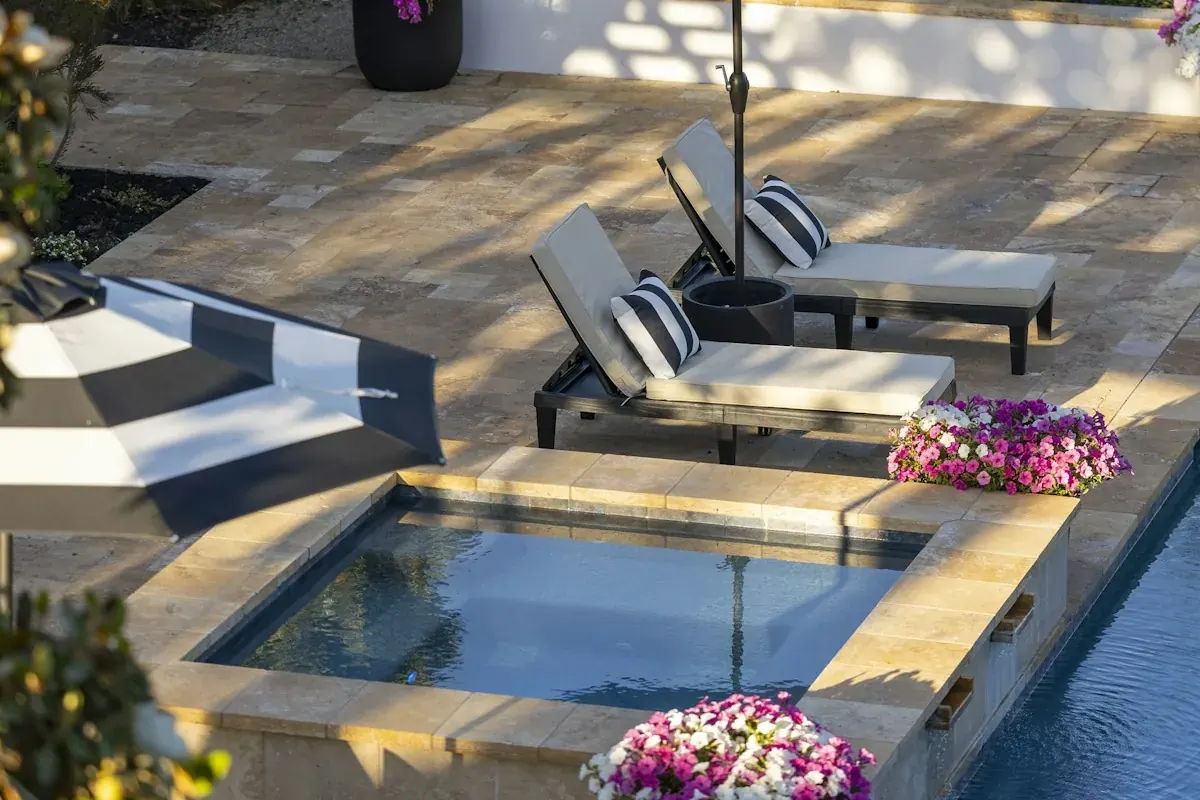
How the pad is built
The pad is laid out a little larger than the spa, excavated, given a compacted base and reinforced. It is poured flat and level rather than sloped, set slightly above the surrounding ground so water runs away, and finished smooth enough for the spa's base to sit fully on it. Conduit for the electrical goes in before the pour.
The full checklist, including clearances and access for the spa cover and service panels, is in hot tub pad requirements.
Phoenix spa barrier rules
In Phoenix, a portable spa or hot tub with a safety cover that meets ASTM F1346 is exempt from the pool barrier rules. That comes from the City's amendments to the 2024 International Swimming Pool and Spa Code, adopted by Ordinance G-7397 and effective August 1, 2025. Without a compliant cover, the spa area falls under the same barrier requirements as a pool. Other Valley cities adopt their own versions of the code, so check yours.