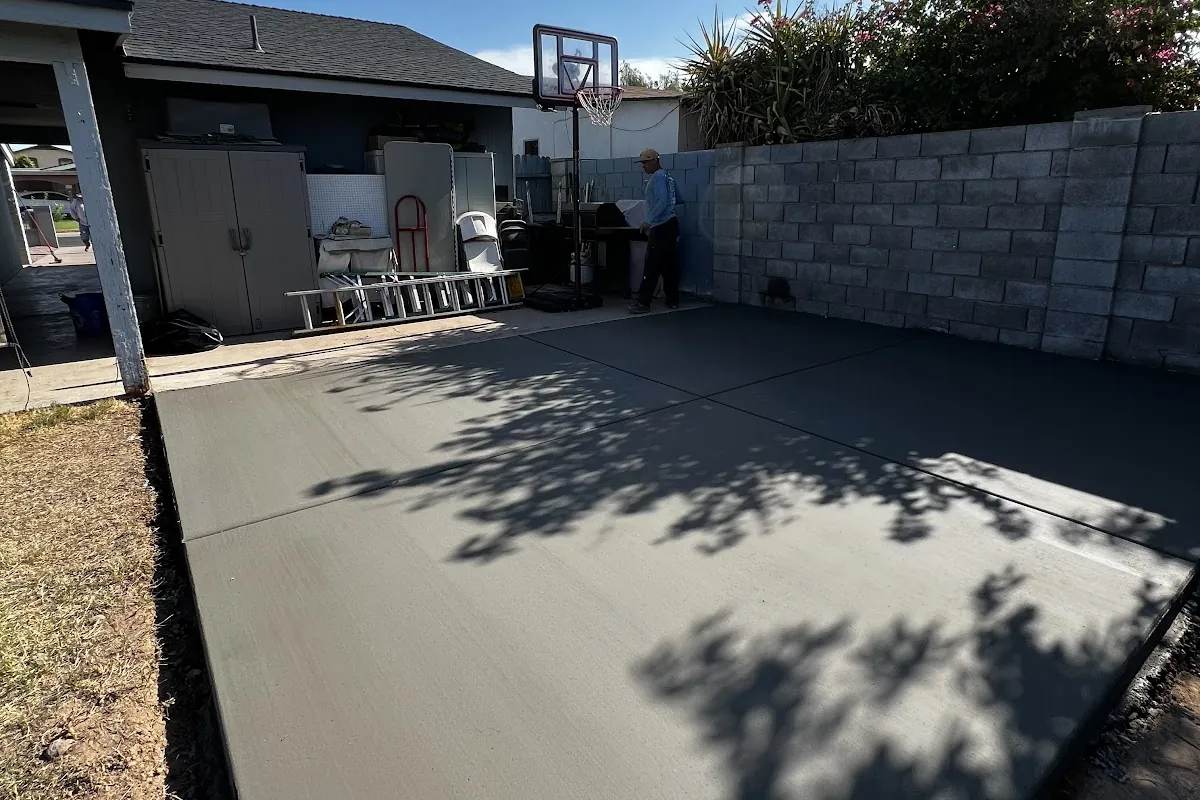
Why a shed needs a real pad
A shed is only as square as what it sits on. On pavers or gravel, the corners settle at different rates, the frame racks, and the doors stop closing. On a level concrete pad set above the yard, the shed stays square and monsoon water runs past it instead of under the floor.
In Phoenix there is also a useful permit line: a one-story detached shed of 200 square feet or less is exempt from a building permit. Many popular kits are sized just under it, at 10x16 or 12x16.
| Shed | Square feet | Phoenix permit | Pad cost at $7 to $12/sf |
|---|---|---|---|
| 8x10 | 80 | Exempt (under 200 sf) | about $800 to $1,300 (scaled from HomeBlue 10x10) |
| 10x10 | 100 | Exempt | $1,000 to $1,600 (HomeBlue) |
| 10x12 | 120 | Exempt | about $1,200 to $1,900 (scaled from HomeBlue 10x10) |
| 12x16 | 192 | Exempt | $1,340 to $2,300 |
| 12x20 | 240 | Permit required | $1,680 to $2,880 |
Swipe the table sideways to see every column →
Permit column applies to one-story detached sheds without utilities, under the City of Phoenix 'Work Exempt from Permit' bulletin. Small pads are scaled from HomeBlue's 10x10 price, which works out to $10 to $16 per sq ft; larger ones use its $7 to $12 reinforced rate. Pads slightly larger than the shed cost a little more.
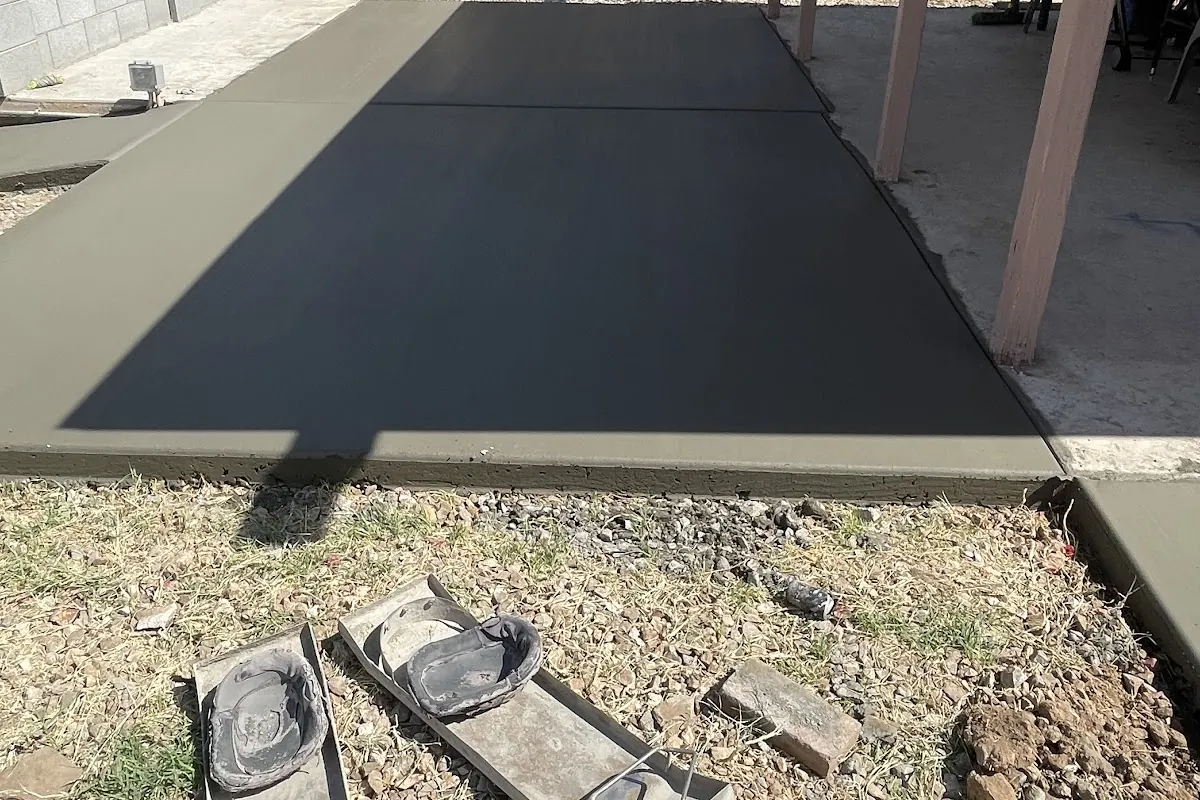
How the pad is built
- Square the layout to the shed's exact footprint, then add the overhang the maker calls for
- Excavate and compact a base so the pad sits a few inches above the surrounding yard
- Reinforce with mesh or rebar set inside the slab
- Set anchor bolts or plan for post-installed anchors where the kit needs them
- Pour, check level, and give it a smooth or light broom finish for the shed floor
- Keep it clear of the block wall footing and leave access behind the shed
More detail on sizes and thickness is in the shed pad size and thickness guide.