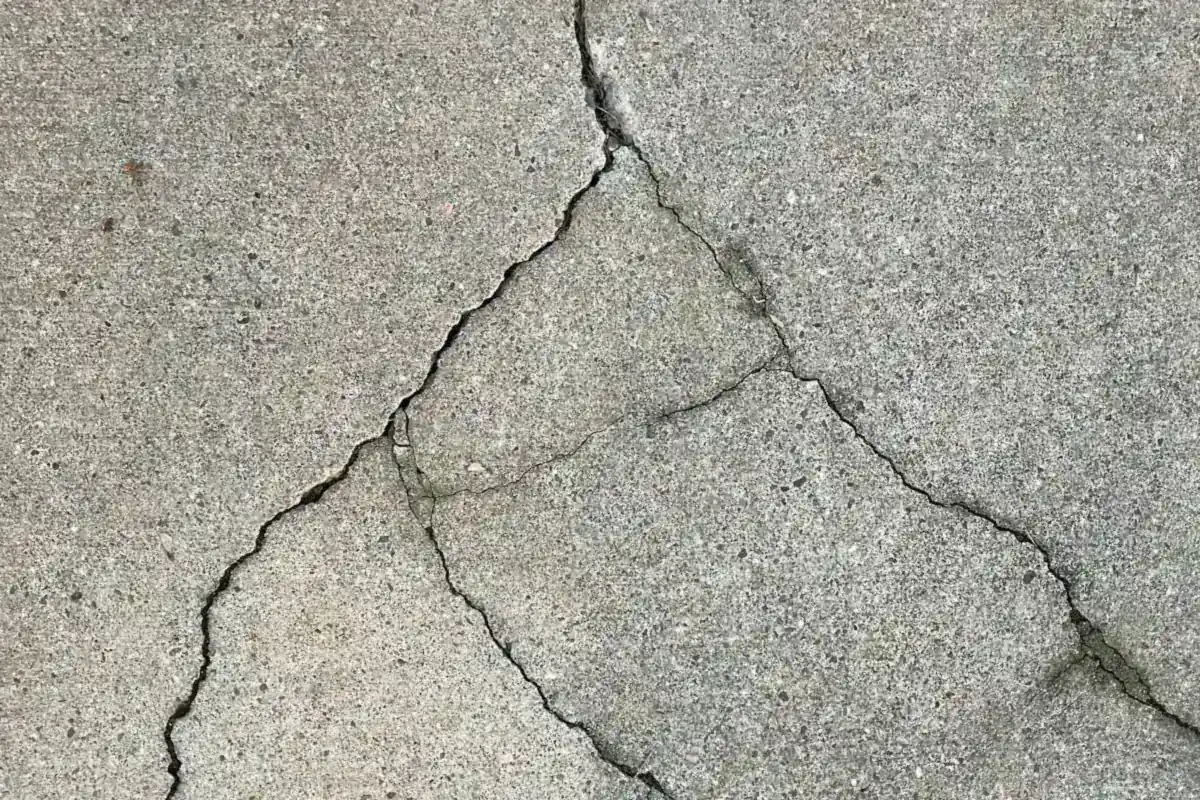
Reading the cracks
Not every crack means replacement; the pattern tells you what failed. Concrete shrinks as it dries, so a few thin cracks are normal. What matters is whether the slab is still level, still in one plane, and still sending water away from the house.
| What you see | Usual cause | Usual fix |
|---|---|---|
| Thin cracks along or near the joints | Normal shrinkage | Nothing, or seal if water gets in |
| Random hairline map cracking on the surface | Surface dried too fast while curing | Cosmetic; leave or resurface |
| Cracks with one side lower than the other | Base settled or washed out | Replace the panel or pad with a new base |
| A corner or edge broken off | Thin edge, vehicle load, no reinforcement | Replace with a thickened edge |
| A pad tilted toward the house | Fill settlement next to the foundation | Replace and re-slope |
| Cracks under where tires or jacks sit | Slab too thin for the load | Replace at the right thickness |
Swipe the table sideways to see every column →
General guidance from common concrete practice; the site visit confirms the cause.
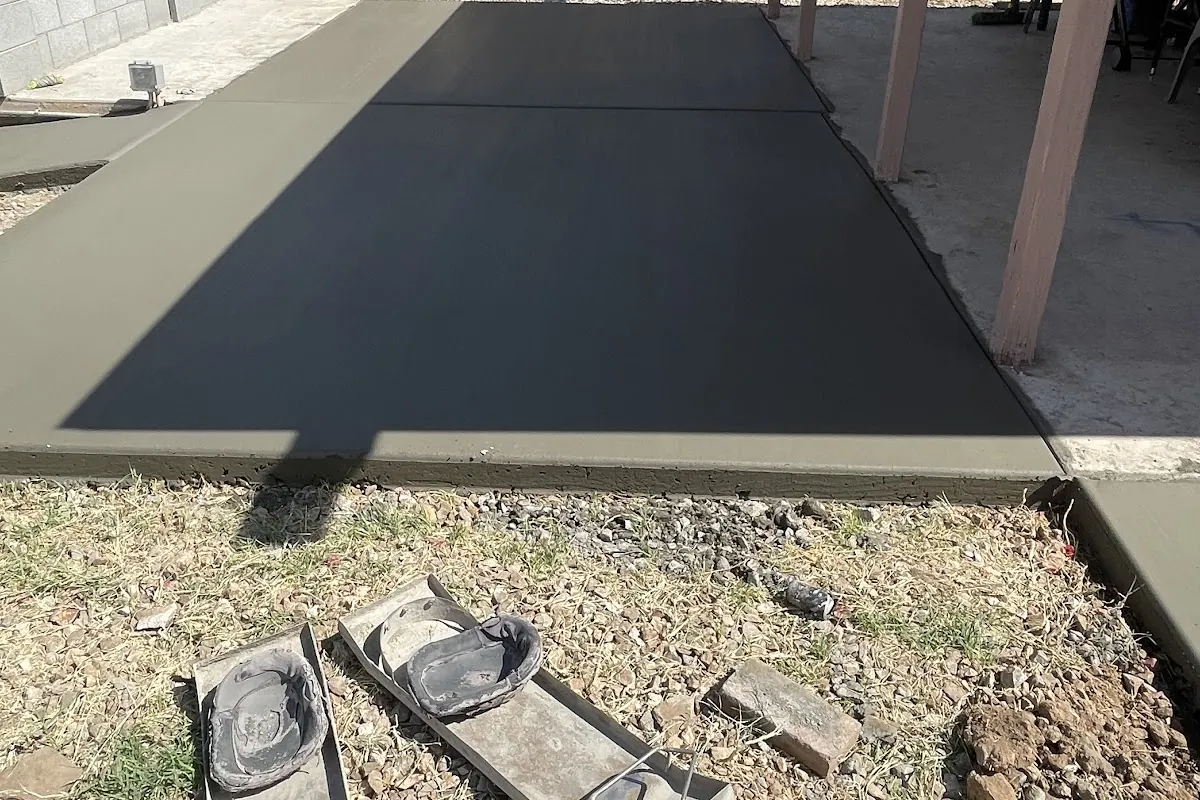
What replacement costs
Replacement is the demolition plus a new pad. HomeBlue's published Phoenix figures put concrete removal at $1.20 to $1.90 per square foot and new reinforced concrete at $7 to $12 per square foot. Thick or heavily reinforced old slabs, and pads a machine cannot reach, sit at the high end.
The full table is in the concrete pad cost guide. If the failed pad carried an RV, the new one should follow the RV pad thickness and rebar guide.