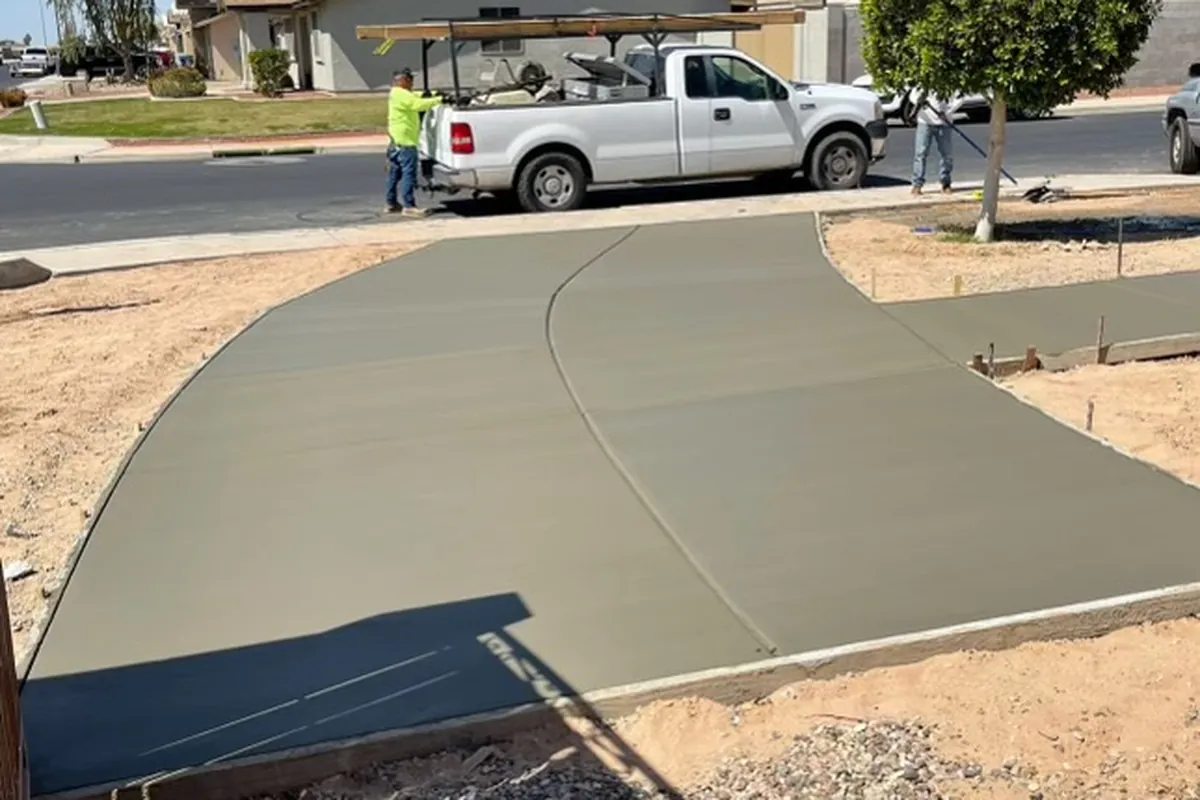
What a driveway extension is, and where it stops
A driveway extension is new concrete poured beside your existing driveway, on your own lot, so one more vehicle can park off the street. It usually replaces a strip of gravel or rock landscaping between the drive and the side yard, and often leads to an RV gate.
The line that matters is the property line. Everything on your lot is ordinary flatwork. Anything that widens the driveway where it crosses the sidewalk and curb is in the public right of way, and the City of Phoenix has its own rules for that.
The City of Phoenix right-of-way rule
| Situation | What the City requires |
|---|---|
| Driveway work on your own lot, at grade | No building permit (driveways up to 30 in above grade are exempt) |
| Street with roll or ribbon curb, up to 10.5 ft of concrete drive in the right of way | Treated as part of the on-site job; no separate driveway permit |
| More than 10.5 ft of driveway in the right of way | Separate driveway permit |
| Street with no curb, gutter or sidewalk | Driveway permit and an at-grade tie-in to MAG Standard Detail 205 |
| Residential driveway concrete in the right of way | 6 inches thick |
Swipe the table sideways to see every column →
From the City of Phoenix 'Driveway Policy for Single Family Development' (rev. 03/26) and 'Work Exempt from Permit'. Mesa, Gilbert and other cities have their own right-of-way rules.
In plain terms: widening the slab beside your drive is usually simple, while cutting a wider curb opening is a permit job. Mesa adds a front-yard limit, with parking in the front yard capped at 50% of its area.
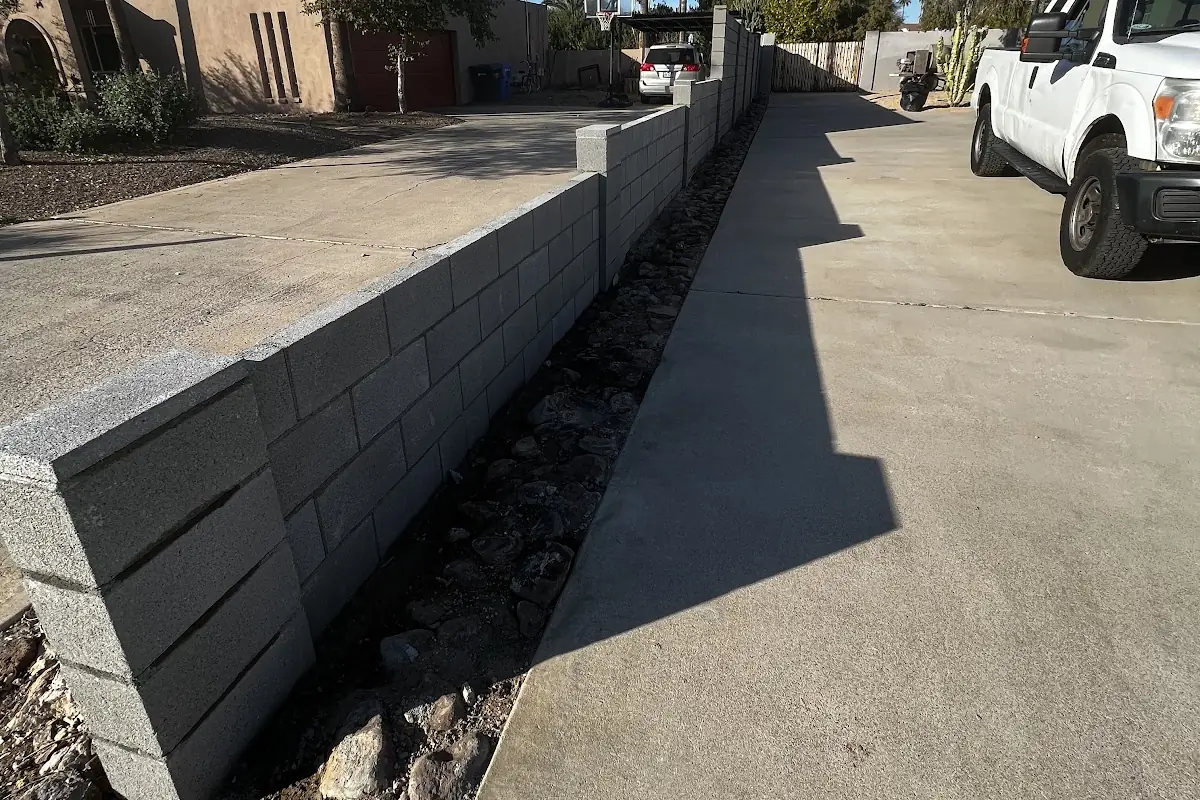
Building it so it lasts
Match the old slab's height and thickness, and separate the two cleanly. The extension is excavated to the existing drive's depth, a compacted base goes down, and an isolation or construction joint goes where new meets old so each slab can move on its own. Dowels into the old slab are used where the contractor wants the two to stay flush.
For cars, 4 inches reinforced is common; for trucks, trailers or an RV, 5 to 6 inches. Prices for common sizes are in the concrete pad cost guide, and the RV version is covered under side yard RV parking pads.