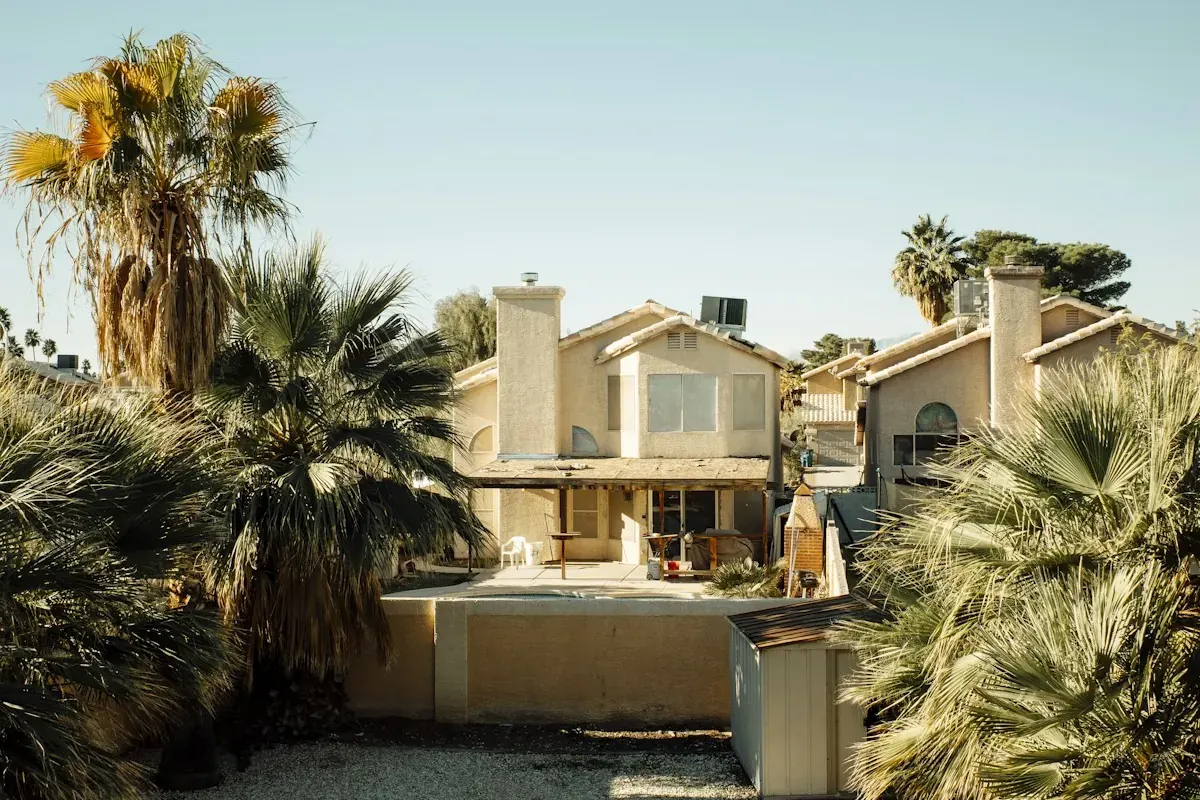
What a pool equipment pad has to do
The equipment pad carries hundreds of pounds of pump, filter and heater, and the PVC plumbing between them only stays tight if none of it moves. In Valley backyards the equipment is usually tucked against the block wall or the side yard, on whatever was left when the pool went in. When that settles, unions start to weep and the pump shifts on its base.
The other enemy is water. Backwashing, cartridge cleaning and the occasional leak keep the ground around the pad wet, which is the fastest way to soften fill. The new pad sits slightly above grade and slopes off its edges.
| Equipment set | Typical pad | Notes |
|---|---|---|
| Pump and filter only | 4x6 to 5x6 | Leave room to open the filter and pull the pump basket |
| Pump, filter and salt cell | 5x8 | Cell and controller usually mount to the wall or a post |
| Pump, filter and heater | 6x10 | Heaters need manufacturer clearances; check before sizing |
| Two pumps, filter, heater, booster | 6x12 or larger | Common on pools with spa spillovers or water features |
Swipe the table sideways to see every column →
Typical layouts, not equipment specifications. Your pool technician's layout and the heater's installation manual set the final size.
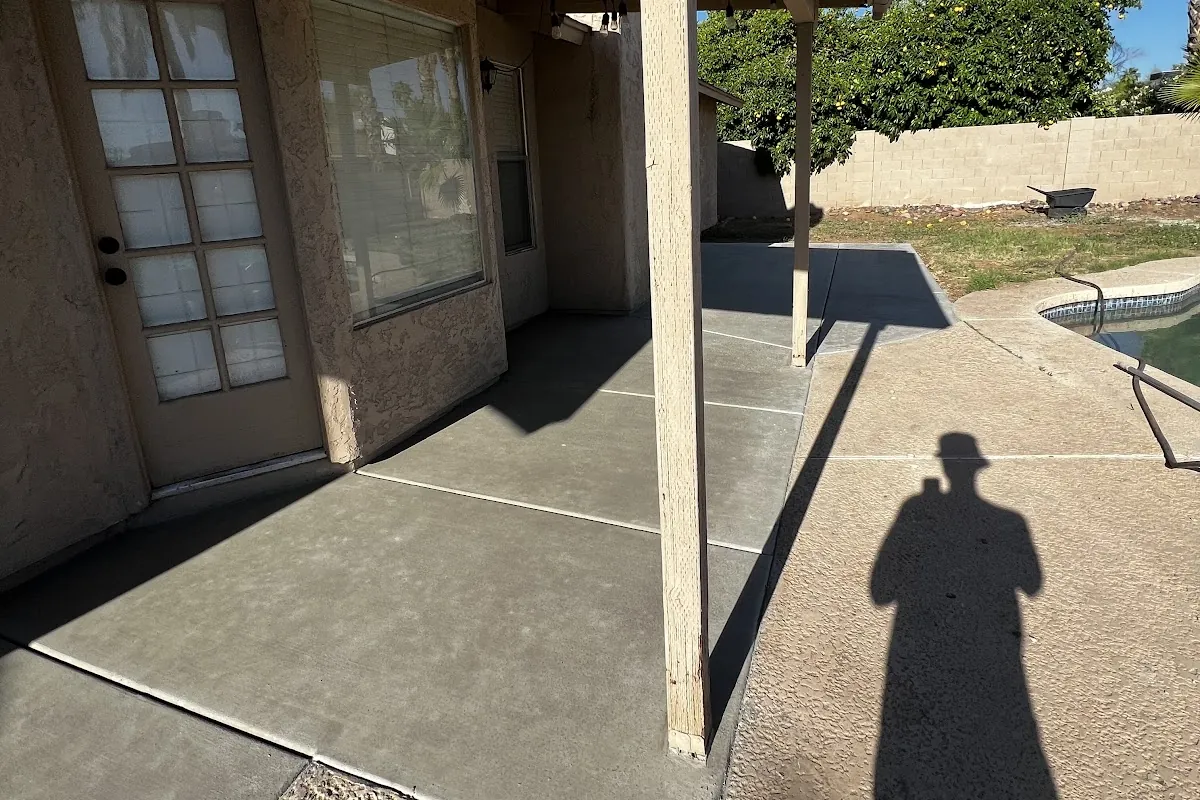
Before the pour
- List every piece of equipment now, and anything you plan to add in the next few years
- Have the pool technician confirm the layout and any heater clearances
- Plan where backwash and drain water go, away from the pad and the house
- Keep the pad clear of the block wall footing and any gas line
- Decide who disconnects and reconnects equipment: that is the pool tech, not the concrete crew
Paving the side yard at the same time saves a second mobilization. See side yard concrete.