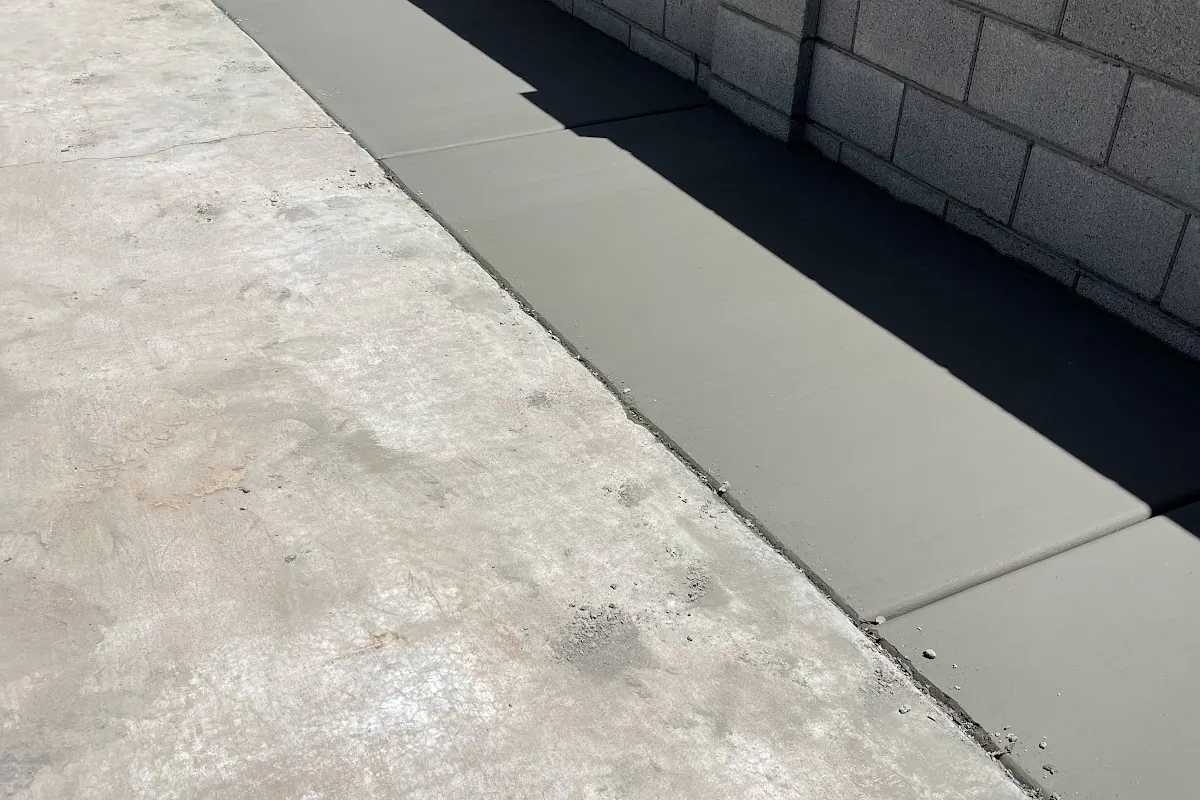
Why AC pads fail in the Valley
Most failed condenser pads in Phoenix were set on loose fill right where roof water and irrigation land. The soil beside a new home's foundation is backfill, and every monsoon storm and drip line softens it a little more. One side drops, the unit tilts, and the copper line set and the electrical whip start carrying a load they were never meant to.
Lightweight plastic pads have the same problem in a different way: they sit on the surface and move with it. A concrete pad on a compacted base, set slightly above grade, stays put.
- The condenser visibly leans or a level shows it out by more than a little
- The pad has cracked across or broken at a corner
- Water pools around or under the unit after rain
- The pad has dropped below the surrounding gravel
- You are replacing the AC unit and the new one is larger than the old pad
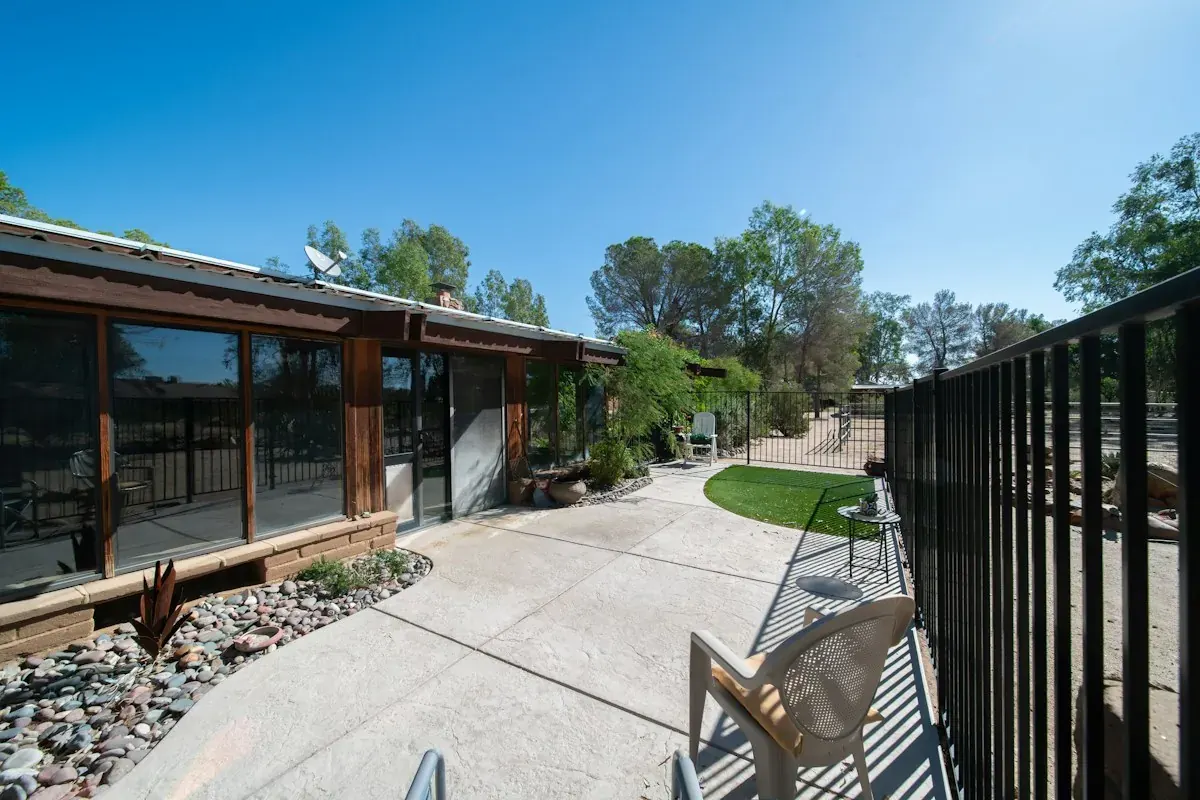
How a replacement works
The pour itself is small; the coordination is the job. Your HVAC technician decides whether the unit can be lifted aside with the lines connected or needs to be disconnected. The old pad comes out, the ground is compacted, and a new pad goes down a little larger than the unit, level, and high enough to stay out of standing water.
Pouring a new pad in July is fine with early-morning timing and proper curing; the unit goes back once the slab can take it. If the condenser is being moved to make room for an RV, see side yard RV parking pads.